

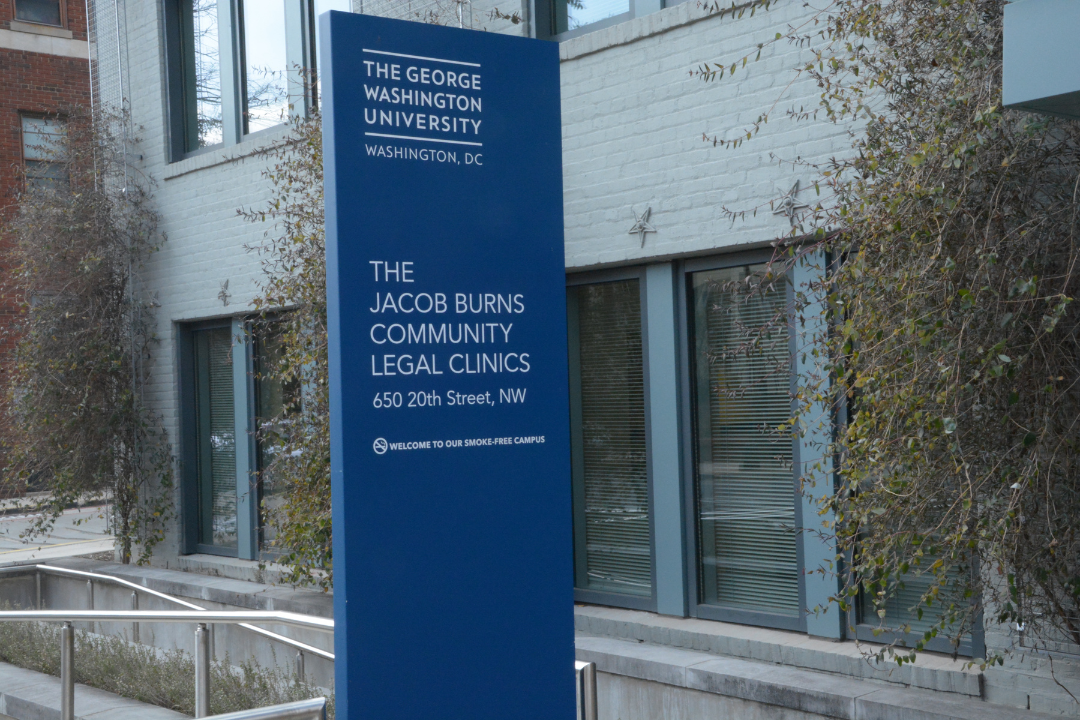
Student attorneys in the Immigration Clinic at GW Law helped a 72-year-old client avoid deportation by successfully obtaining a writ of coram vobis, which vacated shoplifting convictions from over a decade ago.
The Immigration Clinic, led by Professor Paulina Vera, is one of 15 clinics currently offered through GW Law’s Jacob Burns Community Legal Clinics Program. Student attorneys in the clinics represent clients in the Washington, D.C., metro area, and provide free legal services to both individual and organizational clients.
The client in this case is a grandmother and green card holder, originally from Hong Kong, who has lived in the U.S. for decades. About 10 years ago she was convicted for various shoplifting-related offenses and entered guilty pleas for all of them. The convictions were considered “crimes involving moral turpitude” and placed the client in removal proceedings in Immigration Court with the Executive Office for Immigration Review.
“Our client has no family left in Hong Kong and was facing a situation of going back to a place she had not lived in for decades, without any familial support ... When she entered the pleas, she did not understand the gravity of the situation she was facing because no one explained it to her in her native language."
Paulina Vera
Director, Immigration Clinic

However, the client was never advised in her native language of Fuzhou when she was facing the shoplifting offenses. At the time, she relied on the help of her adult children, who were able to provide only amateur interpretation, and attorneys who spoke to her in Mandarin, which is linguistically very different from Fuzhou, Professor Vera said. Because of the language barrier, the client did not understand the immigration consequences of her guilty pleas.
“Our client has no family left in Hong Kong and was facing a situation of going back to a place she had not lived in for decades, without any familial support,” Professor Vera said. “In the U.S., she has all her adult children, as well as her grandchildren, who she spends her days caring for. When she entered the pleas, she did not understand the gravity of the situation she was facing because no one explained it to her in her native language.”
Professor Vera and her predecessor, Professor Alberto Benitez, who led the Immigration Clinic for over two decades, worked with student attorneys to petition for a writ of coram vobis for the client. The coram vobis is a common law writ of error that allows a court to “correct its own record with reference to a vital fact not known when the judgment was rendered, and which could not have been presented by motion for a new trial, appeal[,] or other existing statutory proceeding.”
The coram vobis is rarely granted, Professor Vera said. Even so, the student attorneys in GW Law’s immigration clinic successfully obtained it, with the help of pro bono counsel at Paul Hastings, on August 12. With the writ of coram vobis in hand, the clinic was able to to file a Motion to Terminate Removal Proceedings for their client, halting her removal from the country. That motion was granted on September 16.
“This victory is a testament not only to the value of clinical legal education, but also to the quality of advocacy and instruction by Professor Vera, and our clinics as a whole,” Associate Dean for Experiential Programs and Clinic Director Carmia Caesar said.
“This victory is a testament not only to the value of clinical legal education, but also to the quality of advocacy and instruction by Professor Vera, and our clinics as a whole."
Carmia Caesar
Associate Dean, Experiential Programs; Clinic Director
The clinic worked with Sam Thomas, JD ‘20, an associate in the Litigation Department at Paul Hastings, to represent the client in Virginia state court. Thomas represented the client alongside other Paul Hastings attorneys on the firm’s pro bono team, including Chris Brewer, Marguerite Harris, and Faven Getahun, and a team of student-attorneys from the clinic.
“Creativity goes a long way in the law,” Thomas said. “The team at the Clinic deserves so much credit here. They came to us with the idea of filing a coram vobis petition, which is a pretty unique procedural mechanism and form of relief.”
The support from Thomas and the other Paul Hastings attorneys was immensely valuable to obtaining the writ of coram vobis, Professor Vera said.
“We attempted to get pro bono support for the post-conviction relief from a few firms before Sam and his team agreed to take on our client,” Professor Vera said. “From working with our clinic students to draft the arguments, to doing the oral arguments to survive a motion to dismiss, to negotiating with the Virginia Office of the Attorney General to stipulate to facts, the Paul Hastings team advocated zealously to get our client this amazing result.”
“Being a student attorney in the Immigration Clinic, specifically under Professor Vera’s direction, has been the highlight of my legal education.”
Mary O'Brien
GW Law Class of 2027

An Only-at-GW Experience
The Immigration Clinic’s success in this case was not only life-changing for the client; it also provided an intensive learning experience for the 14 students and alumni who worked on the case.
“Being a student attorney in the Immigration Clinic, specifically under Professor Vera’s direction, has been the highlight of my legal education,” said Mary O’Brien, Class of 2027, the student attorney who filed the Motion to Terminate Proceedings on behalf of the client. “Each student attorney that touched this case, each professor from Professor Benitez to Professor Vera, all of them zealously fought for our client. I wouldn’t have had the honor of meeting and representing our client without those who came before me."

“The clinic gave me the opportunity to work hard on something that I care about, while also gaining experiences and developing skills as a law student that often only become available to lawyers later in their careers—things like arguing in court, individually counseling a client, and making substantive filings under your own signature."
Sam Thomas
JD '20
Thomas said he encourages every law student he meets to work for a clinic just as he did with the Immigration Clinic when he was at GW Law.
“The clinic gave me the opportunity to work hard on something that I care about, while also gaining experiences and developing skills as a law student that often only become available to lawyers later in their careers—things like arguing in court, individually counseling a client, and making substantive filings under your own signature,” Thomas said.
The lessons students learn from working in clinics prepare them to be practicing lawyers immediately after graduation.
“This case was won because of an idea that originated with a group of law students,” Dean Caesar said. “Clinics contribute critical legal work to the clients that they serve. Their victory underscores for our students that it is never too early to be an outstanding advocate.”
O’Brien said the experience helped her develop her critical thinking, client interviewing, and interpersonal skills. O’Brien worked closely with the client and her family to collect 37 exhibits and prepare for potential trial, including drafting an over 1,000-page court filing.] The experience was immensely valuable and rewarding, O’Brien said, and she largely credits Professor Vera’s leadership.
“Professor Vera is a phenomenal mentor and professor,” O’Brien said. “I could not have asked for a better leader for the Immigration Clinic. She is incredibly knowledgeable about this field and willing to share that knowledge.”


