

Alicia Solow-Niederman
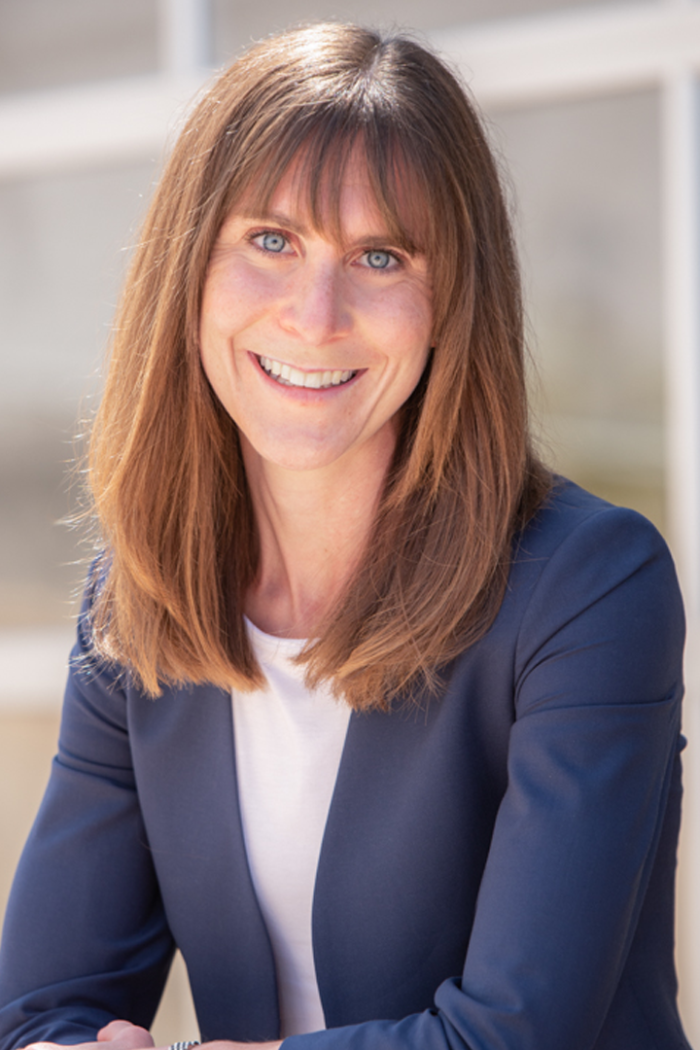
Alicia Solow-Niederman
Associate Professor of Law
Contact:
2000 H Street, NW
Washington, DC 20052
Alicia Solow-Niederman’s scholarship sits at the intersection of law and technology. Her research focuses on how to regulate emerging technologies, such as artificial intelligence, in a way that reckons with social, economic, and political power. With an emphasis on algorithmic accountability, data governance, and information privacy, Professor Solow-Niederman explores how digital technologies can both challenge longstanding regulatory approaches and expose underlying legal values.
Professor Solow-Niederman’s work has been published in the Stanford Law Review, Harvard Journal on Law & Technology, the Northwestern University Law Review, and the Southern California Law Review, among other law reviews and peer-reviewed journals. Her article, AI and Doctrinal Collapse, was one of two papers awarded an "Honorable Mention” in the 2026 AALS Scholarly Papers competition and one of seven papers nationwide that received the 2026 Future of Privacy Forum "Privacy Papers for Policymakers” award. In recognition of her scholarship, she received the 2026 George Washington University Office for Vice Provost of Research Early Career Award.
Professor Solow-Niederman is a member of the Electronic Privacy Information Center (EPIC) Advisory Board. She is also a faculty affiliate at Harvard University’s Berkman Klein Center for Internet & Society and a visiting fellow at the Yale Law School Information Society Project, where she worked with the Media Freedom and Information Access Clinic on a series of FOIA requests concerning state government use of AI.
Professor Solow-Niederman teaches or has taught courses in information privacy, technology and law, legislation and regulation, and torts. She was previously a Climenko fellow and lecturer on law at Harvard Law School and also served as the inaugural fellow in artificial intelligence, law, and policy for UCLA Law’s Program on Understanding Law, Science, and Evidence. Professor Solow-Niederman clerked in the U.S. District Court for the District of Columbia.
BA, Stanford University; JD, Harvard University
- 6209 - Legislation and Regulation
- 6486 - Information Privacy Law
- 6881 - Artificial Intelligence Law and Policy